
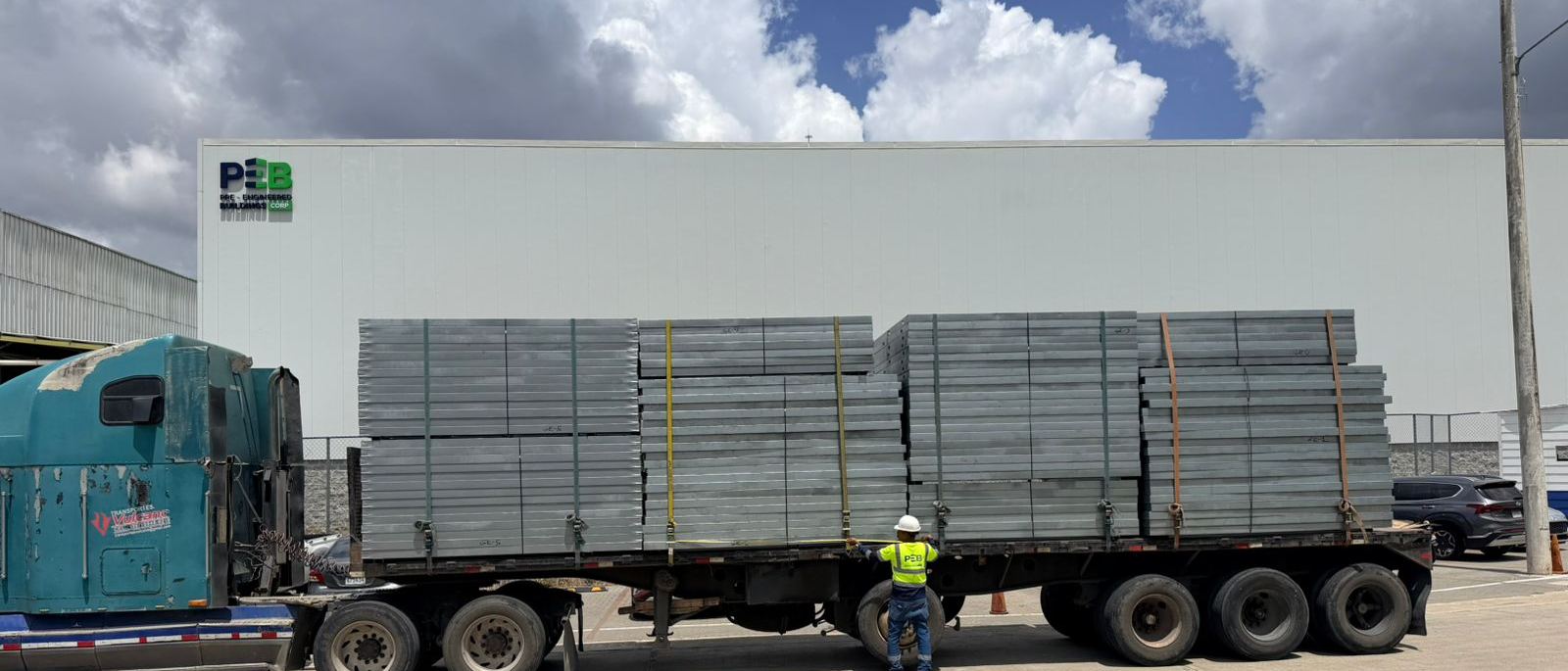
Coverage: where we ship the steel
NewCon Steel® ships profiles, panels, and structural kits from its Panama City plant to Panama, Colombia, Central America (Costa Rica, Guatemala, Honduras, El Salvador, Nicaragua), and the Caribbean (Dominican Republic, Jamaica, Bahamas, Cayman Islands, Trinidad, Curaçao, Aruba). Export shipments go out with a Panamanian certificate of origin (HS 72.16); import treatment is decided by the destination customs. It also supplies US and Canadian developers building in those markets.
Every destination has its own design code and its own tariff framework. This page sets out both, country by country, in terms your customs broker can verify.
Colombia
Need profiles, panels or kits for Colombia?
Review supply options from our Panama plant, information needed for a quote and delivery responsibilities for your Colombian project.
Steel framing profiles for ColombiaMade in Panama, with certifiable Panamanian origin
Origin is the part NewCon Steel can document. Tariff treatment is decided by the customs authority of your country, and we say so from the quote onward.
Our profiles are cold roll-formed in Panama from imported coil. That transformation changes the tariff heading of the goods, from flat-rolled product to structural section, and it supports Panamanian origin under the rules of origin of Panama's agreements in force. Origin comes from the forming, not from the coating: under the express text of those agreements, applying a protective coating does not confer origin.
In practice, we issue a Panamanian certificate of origin, and you claim from your own customs authority whatever preferential tariff treatment applies under the relevant agreement, if any. The final duty is always determined by the destination customs authority, based on its national tariff schedule, the applicable agreement, and the classification of the goods.
That is why we work with your customs broker from the quote stage, and we can pursue an advance ruling on origin and classification for your project. That ruling turns tariff treatment from an expectation into a certainty.
- Certifiable Panamanian origin, grounded in the cold forming performed in Panama
- Certificate of origin issued under the agreement applicable to your destination
- Preferential access subject to the tariff schedule and rules of origin of the destination country
- Advance ruling on origin and classification handled for you, when the project warrants it
Duty is set by your country's customs authority
No Panamanian regime can eliminate the duty charged by another country's customs authority. Where tariff relief exists, it comes from the trade agreement and the destination's rules of origin, not from the location of our plant. A promise of duty-free entry into Central America or the Caribbean depends on a decision made by the destination customs authority, not by the supplier. That is why we review tariff treatment with your customs broker from the quote stage, and we do not quote DDP on the assumption of zero duty.
Design code and trade instrument, country by country
Two things change depending on where we ship: the code the structure is calculated against, and the agreement under which the steel clears customs. Both depend on the destination country, not on the sales offer.
| Destination | Governing design code | Trade instrument in force with Panama | Documents we issue |
|---|---|---|---|
| Panama | REP-2021 (JTIA), in force since April 30, 2023. Members designed to AISI S100-16 (R2020) w/S3-22 and AISI S240-20. | Domestic market: no import formalities | Mill certificate for the steel; sealed calculations when the scope includes them |
| Colombia | NSR-10 (Colombian Seismic-Resistant Construction Code) | Partial Scope Agreement. There is no Panama–Colombia FTA in force: the preference is limited to a closed list of products and must be verified heading by heading | Panamanian certificate of origin; tariff-heading verification with your customs broker |
| Costa Rica, Guatemala, Honduras, El Salvador, Nicaragua | The country's national structural code; loads per ASCE/SEI 7-22 where the project adopts it | Central America–Panama FTA, with a bilateral protocol per country. Each protocol carries its own tariff phase-out annex and its own rules of origin | Panamanian certificate of origin under the applicable bilateral protocol |
| Dominican Republic | IBC in the edition adopted by the jurisdiction, with the edition of ASCE/SEI 7 that edition references, including its hurricane wind-speed maps and seismic parameters | Partial Scope Agreement, closed list of products | Panamanian certificate of origin; the preference depends on the heading being on the list |
| Trinidad and Tobago | IBC / ASCE 7 as adopted by the project's jurisdiction; confirm the adopted edition with the reviewing authority before design | Partial Scope Agreement in force since July 4, 2016, closed list of products | Panamanian certificate of origin; tariff heading verified in advance |
| Jamaica, Bahamas, Cayman Islands, Curaçao, Aruba | IBC / ASCE 7 as adopted by the project's jurisdiction; the adopted edition, the wind-speed map, and the local amendments differ island by island | No preferential trade agreement in force with Panama: the destination country's general tariff applies | Panamanian certificate of origin for the customs clearance |
National codes across Central America and the Caribbean vary by jurisdiction and by adopted edition, and so do the wind and seismic parameters that drive a cold-formed steel design. We confirm the applicable code with the reviewing engineer on your project before issuing calculations, without assuming one by default. Likewise, duty treatment is decided by the destination customs authority, which is why every row above names the instrument in force rather than promising an outcome. PEB Corp provides the engineering for the Dominican Republic, Guyana, and Suriname, and summarizes the codes for Jamaica, Trinidad and Tobago, and the Bahamas.
Why Panama instead of a transpacific crossing
These four advantages come from where the plant is, not from each project, and they are what moves the landed cost of your structure.
Manufacturing in Panama means regional transit to Central America and the Caribbean: days, not weeks. There is no transpacific crossing, no exposure to long-haul freight, and no container already at sea by the time you catch an error.
It also means your counterpart works Panama City business hours (UTC−5). When there is a clash to resolve, a thickness change, or a claim to settle, the answer does not arrive at 3 a.m. from twelve time zones away.
- Regional transit from Panama: days, not weeks
- No full-container minimum order quantity (MOQ), unlike typical purchases from Asia
- Engineering support during Panama City business hours (UTC−5), in English and Spanish
- Certifiable Panamanian origin, with the certificate of origin issued by us
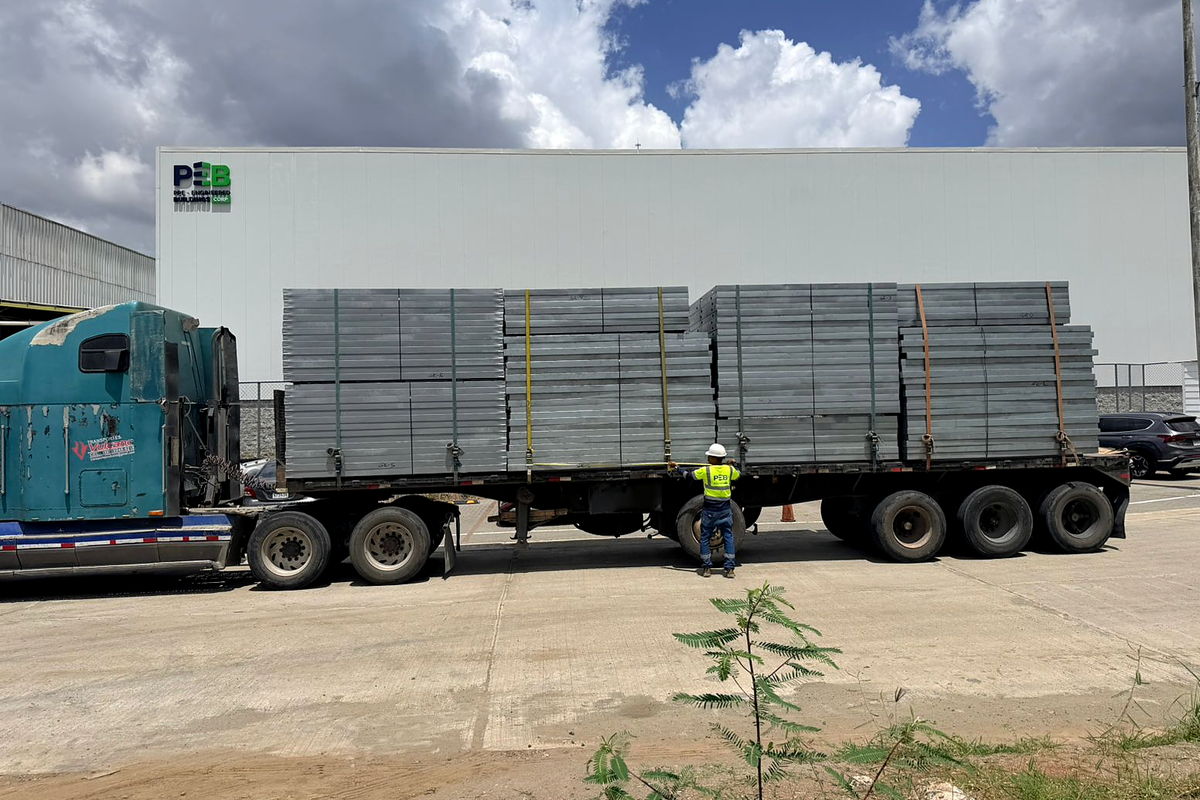
North American developers building in the region
If you are a US or Canadian developer with a project in the Caribbean or Central America, the challenge is usually the supply chain, not the steel. Buying in Asia and shipping to an island adds a transpacific crossing, a full-container MOQ, and a counterpart twelve time zones away from your site team.
NewCon Steel manufactures in Panama City, invoices in US dollars, works in English and Spanish, and ships into the region with transit measured in days. The calculation package is verified against the code of the country where you are building, not the code where the plant sits.
We hand you the Panamanian certificate of origin and, working with your customs broker, tell you which preference applies to your island and which does not. If your destination has no tariff preference, we tell you so in the quote.
From RFQ to dispatch
Scope and destination
Quantity, profile family and thickness, destination country and port, and the required on-site date. If you already have a customs broker, send us their contact at the start.
24 business hoursFormal quote
Scope of supply, documentation included, and dispatch terms, in writing.
48 hClassification and origin
We verify the tariff heading and the agreement applicable to your destination together with your customs broker. Where the project warrants it, we pursue an advance ruling on origin and classification.
Production and bundling
Material is fabricated against the cut list, dimensionally checked, then bundled and identified by lot.
Dispatch and documentation
The shipment leaves with the mill certificate and the Panamanian certificate of origin, under the applicable agreement.
Ask for transit time and terms to your port
Reply within 24 business hours · technical proposal / quote in 48 h. Send quantities in linear meters, m², or metric tons (1,000 kg), plus profile thickness and destination country.
PEB Corp Group offices
The group offices in Panama, Bogotá and Santo Domingo serve PEB Corp, SmartBrix Construction and NewCon Steel®. The manufacturing plant is in Panama.