
Ask for the data sheet and the sample calculation package
We issue profile data sheets, a sample structural calculation package, the mill certificate, and the section catalog on request.
On request
See the technical documentation →PEB Corp Group · NewCon Steel® · LGS/CFS manufacturing
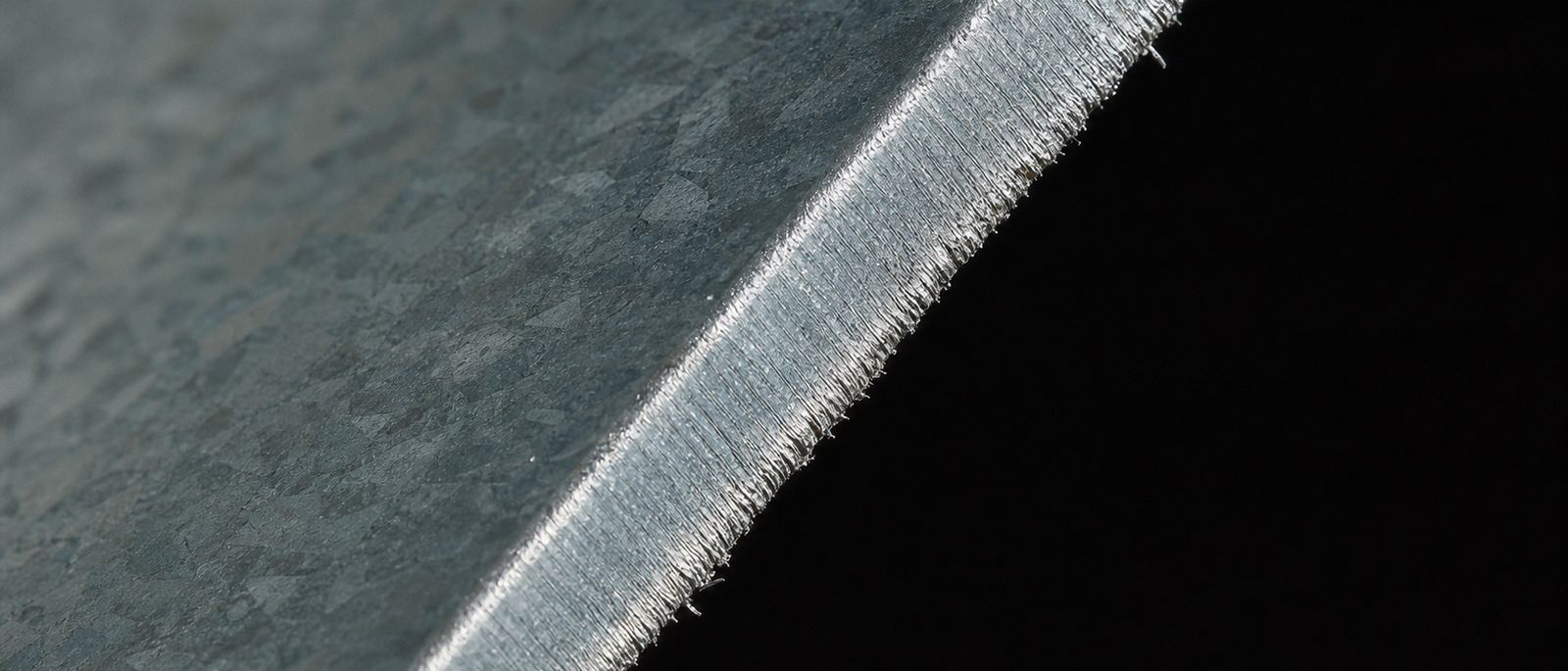
NewCon Steel® members are designed to AISI S100-16 (R2020) with Supplement 3 (S3-22) and AISI S240-20. Each project is verified against the structural code of the destination country (REP-2021 in Panama, NSR-10 in Colombia, and the IBC as adopted by each Caribbean jurisdiction), with calculations sealed by an engineer licensed in the project's jurisdiction.
This page lists each standard with its exact edition and the scope it covers. It gives your reviewing engineer what they need to specify our steel, and it includes only figures we can back with documents.
A design standard is not a badge: it covers a defined scope. These are the standards that apply to cold-formed steel and what each one governs.
| Standard | What it governs | How we use it |
|---|---|---|
| AISI S100-16 (R2020) w/S3-22 | North American Specification for the Design of Cold-Formed Steel Structural Members. Design of cold-formed structural members. | It is the design specification for every one of our LGS/CFS profiles. |
| AISI S240-20 | Framing system: walls, shear walls, floors, roofs, diaphragms, and trusses in cold-formed steel. | It governs the panel and the kit, not just the loose member. |
| AISI S400-20 | Seismic design of cold-formed steel structural systems. | Applied whenever the project's seismic design category requires it, which is the usual case in Panama and Central America. |
| ASCE/SEI 7-22 | Design loads and combinations: dead, live, wind, seismic, and rain. | It defines the demand, meaning how much the structure has to resist. It does not design the steel. |
| REP-2021 | Structural Design Code for the Republic of Panama (REP-2021), issued by the JTIA, in force since April 30, 2023. | Mandatory framework for projects in Panama. |
| NSR-10 | Colombian Seismic-Resistant Construction Code. | Mandatory framework for projects in Colombia. |
| ASTM A1003/A1003M | Specification for coated steel sheet for cold-formed framing members. | It is the base-material standard for our profiles (Type H structural grades). |
| ASTM A1046/A1046M · EN 10346 | Steel sheet coated with zinc-aluminum-magnesium alloy by the hot-dip process. | It is the coil standard: class ZMM275 (ASTM, SI units) / ZM275 (EN 10346). |
The IBC is cited in the edition adopted by the project's jurisdiction, and with the edition of ASCE 7 that this edition references. We do not pair editions that do not reference one another, because a plan reviewer catches that inconsistency on the first pass.
They are two separate design fields. The cold-formed member is governed by AISI S100 and AISI S240, which address local buckling, distortional buckling, and slender sections. The hot-rolled beam is governed by a different specification and belongs to the group's engineering scope. An LGS member is not designed to the hot-rolled specification: if an offer does that, ask for the calculations under AISI S100-16 before you compare.
Coating claims in this market are often vague, but every figure can be checked against a published standard. These are the three numbers you can check against those standards and against the mill certificate.
NewCon Steel uses zinc-aluminum-magnesium (Zn-Al-Mg) coated steel at 275 g/m² (0.90 oz/ft²), class ZM275 per EN 10346 and ZMM275 per ASTM A1046/A1046M Type 1. That is 275 g/m² total across both faces of the sheet, roughly 137.5 g/m² per face. We state this explicitly because it is the figure a buyer checks against the mill certificate, and reading it as "per side" would make the claim false.
That mass is identical to a high-grade Z275 / G90 galvanized coating. The advantage of Zn-Al-Mg lies in its alloy chemistry, not in the quantity of coating, which is the same. If an offer promises "more coating" than a G90 at the same mass, ask for the coating class and mass in writing.
Those 275 g/m² sit more than 50% above the G60 structural minimum (180 g/m², or 0.59 oz/ft², both sides) that ASTM A1003 requires for cold-formed structural framing members. That is a calculation you can verify against a published standard.
We publish both results because they are not interchangeable. A multiplier that does not name its test cannot be used to specify a coating.
First, the mechanism, because that is the verifiable part: the magnesium and aluminum in the alloy migrate across cut edges, punch-outs, and fastener points, forming a protective film over the exposed steel. That is where conventional galvanizing fails first on a cold-formed member: the cut edge, the punch, and the screw.
In accelerated salt spray testing (JIS Z 2371), Nippon Steel reports that Zn-Al-Mg coatings outperform conventional galvanized coatings by 10 to 20 times in corrosion resistance.
In real atmospheric exposure, which reflects service conditions, peer-reviewed literature records mass loss 2 to 4 times lower than conventional hot-dip galvanized steel after 4 to 6 years of weathering, including marine exposure sites.
Salt spray has no linear correlation with real service life. Multiplying salt-chamber hours by a factor to predict years of service in Colón, in Bocas del Toro, or on a Caribbean island is not valid. That is why we cite each test with its standard and its conditions, instead of a single number.
Cold-formed steel design is performed to AISI S100-16 (R2020) with Supplement 3 (S3-22) and AISI S240-20, with seismic design to AISI S400-20 whenever the project's seismic design category requires it. Loads and load combinations are taken from ASCE/SEI 7-22.
On top of that sits the code of the destination country, which governs: REP-2021 in Panama, NSR-10 in Colombia, or the IBC in the edition adopted by each Caribbean jurisdiction. The local code defines the design actions, the seismic design category, and the review requirements; the AISI specification defines how the member is calculated.
The structural calculations are developed by the PEB Corp Group's engineering team, and the calculation package is sealed by an engineer licensed in the project's jurisdiction. When the contracted scope is a structural kit, the sealed calculations are included in the supply.
Technical buyers decide on documents. These are the documents NewCon Steel issues and that you can require by contract before you pay.
If any of them does not apply to your scope, we say so in the quote. We send only the documentation that applies to your order.
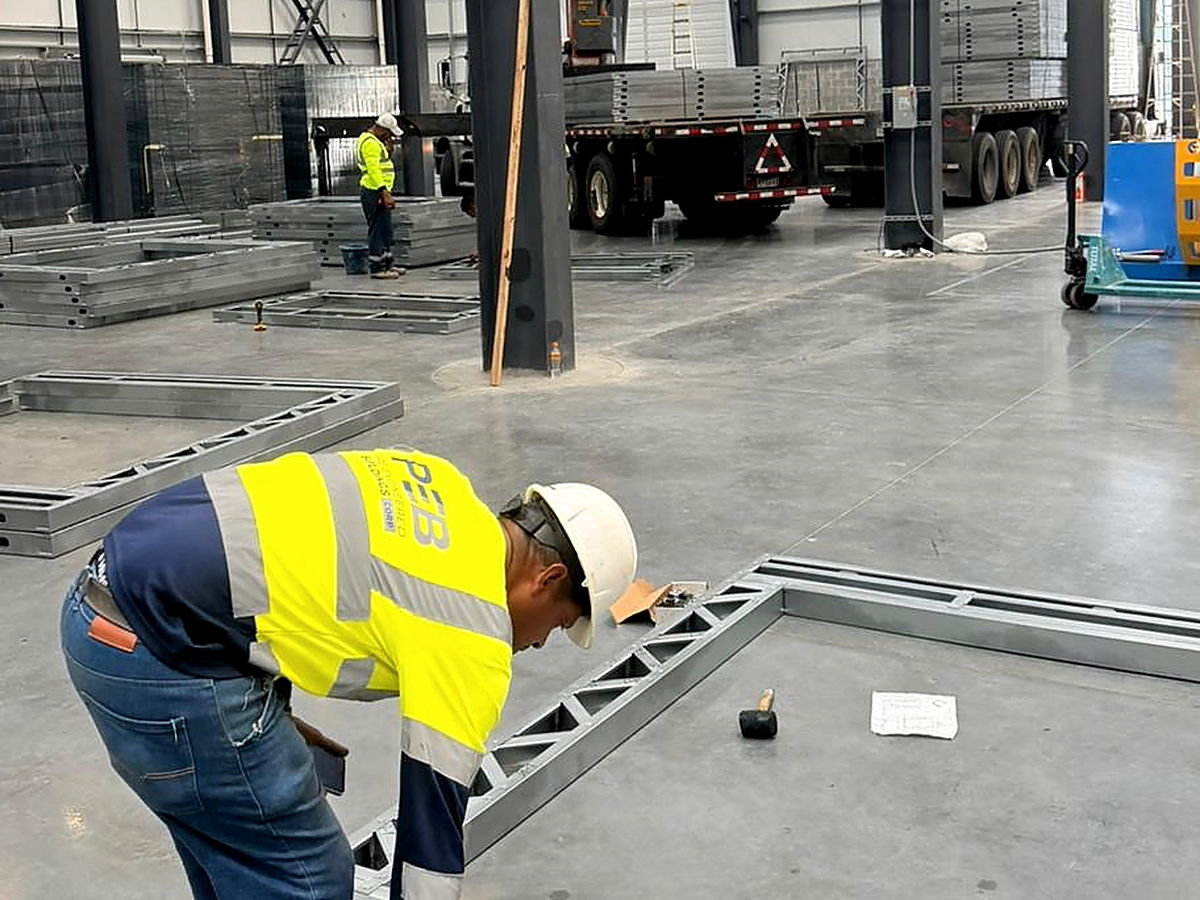
We issue profile data sheets, a sample structural calculation package, the mill certificate, and the section catalog on request.
When the scope is the complete structure, the sealed calculations are part of the supply and are not negotiated as an extra.
PEB Corp, the group's parent company, delivers BIM modeling and structural engineering. NewCon Steel manufactures the steel and issues its mill certificate. PEB Corp explains the design code by country and what the engineering package includes: calculations, BIM model, and shop drawings.
Reply within 24 business hours · technical proposal / quote in 48 h. Send quantities in linear meters, m², or metric tons (1,000 kg), plus profile thickness and destination country.